How I Helped a Student Improve From a 5 to a 7 in IB Maths AA (HL)
When Linda and I had our first lesson, she was consistently achieving a low 5 in IB Mathematics AA. This was her school’s overall grade in November 2025, at the start of her first Diploma year. She had a reasonable understanding of the basic concepts, but she often struggled to apply them to unfamiliar IB-style questions. Like many students, she tended to rely on memorised methods rather than developing a deeper understanding, which made the more challenging exam questions difficult.
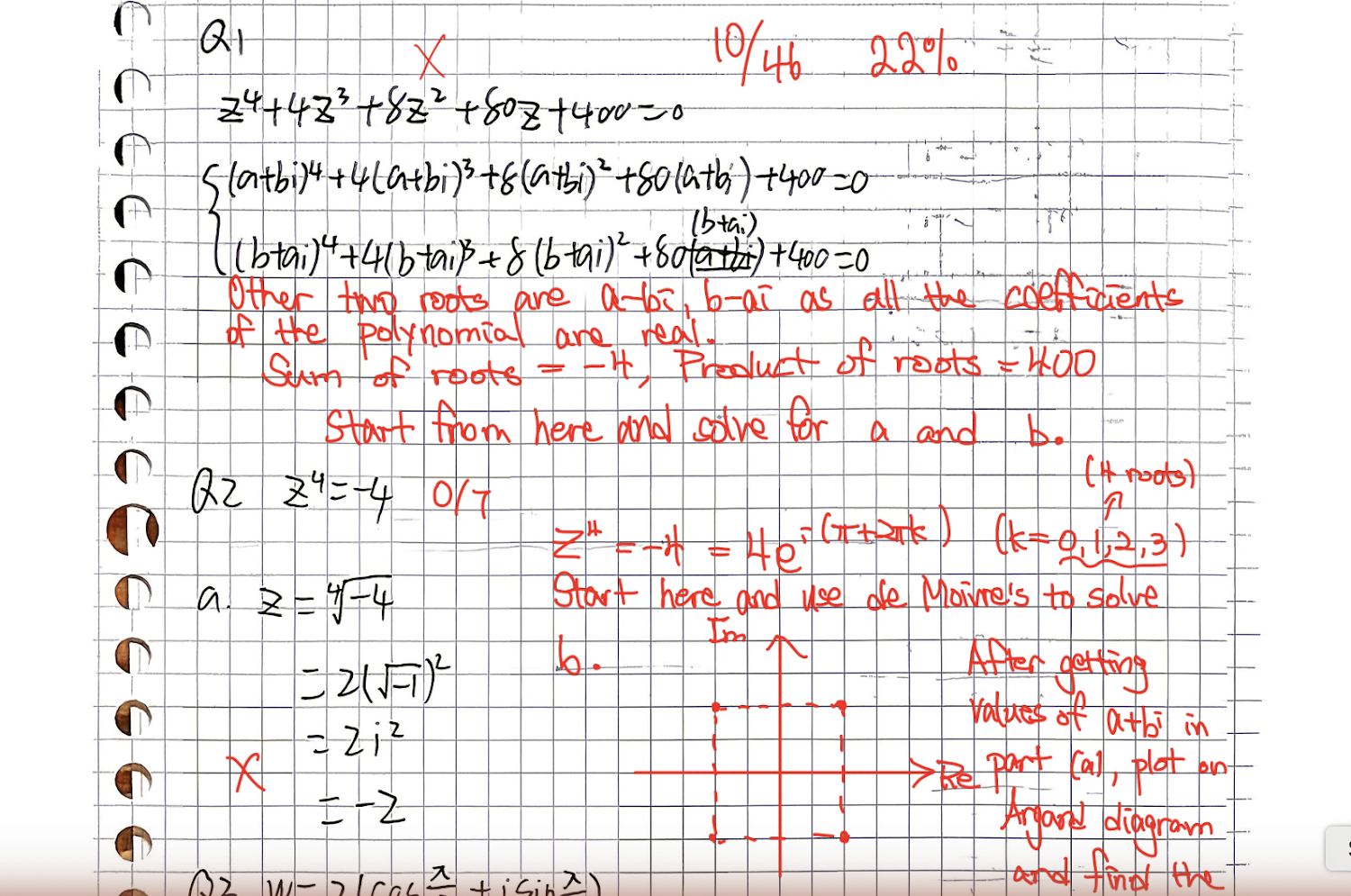
This was clear in her early monthly mocks. She achieved a reasonable 64.8% on Vectors in March, but scored only 22% on Complex Numbers in April, a topic where memorised methods are not enough. Results like these were useful rather than discouraging, as they showed clearly which areas needed the most work.

My approach
To address this, I focused on building Linda’s conceptual understanding before introducing exam techniques. Rather than simply teaching her how to solve individual question types, I encouraged her to think through the reasoning behind each method and to identify patterns across different topics, so that an unfamiliar question became a variation of a problem she already understood.
I also marked each mock in full, so that Linda could see exactly where her working broke down. The feedback was specific and focused on technique. For example, “use inequalities, not sum = 1” when setting up a probability distribution, “k = 5 via discriminant < 0” when finding the condition on a quadratic, and “reason vague, say f″ changes sign” when justifying a point of inflection.
I adapted the pace of our lessons to match her learning style, regularly reviewing previous material to strengthen confidence and retention while targeting the areas that needed the most improvement.
The results
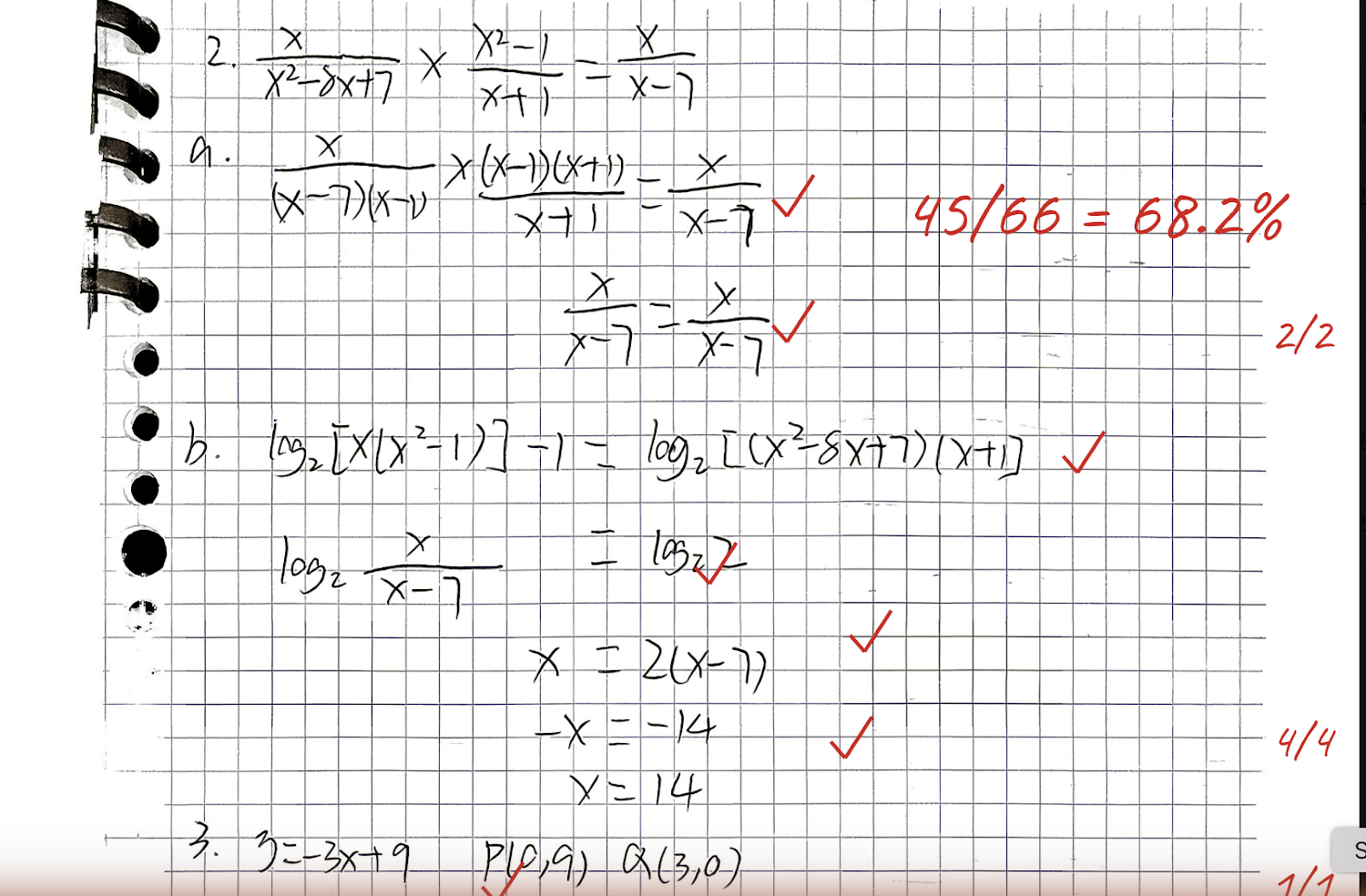
Over time, Linda became much more confident in tackling complex problems independently. She developed stronger analytical thinking, made fewer careless mistakes, and became more comfortable explaining her reasoning. This progress was reflected in her monthly mocks:
Her school grade improved in line with this, rising to a 7 in March 2026 and remaining at a 7 in June 2026. This was a clear improvement across her first Diploma year, and one she now carries into DP2.
Why it worked
The main reason for this progress was the decision to build understanding before technique. Once Linda understood the reasoning behind each method, she was able to approach an unfamiliar question by recognising the idea underneath it, rather than searching for a memorised procedure that happened to match. This matters a great deal in IB Mathematics AA at Higher Level, where the harder questions often combine two or more topics, or present a familiar idea in an unfamiliar form. Understanding transfers to these situations in a way that memorised steps do not, and it is usually the difference between a student who stalls on an unusual question and one who can find a way into it.
Detailed marking played an important part as well. Because each mock was marked in full, every paper became a diagnosis rather than simply a score, and Linda could see precisely which step in her reasoning was incomplete. Her low result on Complex Numbers is a good example. Once we understood why the method had broken down, the same underlying skills carried across to later topics, and her scores recovered and then improved. Progress of this kind is rarely a straight line, and a difficult result along the way is often where the most useful learning happens.
Consistency mattered too. Regularly revisiting earlier material meant that old gaps did not resurface later in the year, and matching the pace of the lessons to Linda kept her confident rather than overwhelmed. Building retention in this way is what allowed each new topic to sit on solid foundations, so that her improvement held steady from March through to June rather than fading after a good mock.
Above all, the improvement came from Linda herself. The approach gave her a clear structure to follow, but the result was earned through her willingness to work through the reasoning on her own rather than wait to be shown the answer. That habit, more than any single technique, is what turned a low 5 into a settled 7.
Closing thoughts
Through Linda’s consistent hard work and our structured approach to learning, she moved from a low 5 to a 7 in IB Mathematics AA HL — a grade that held from March through to the end of DP1, rather than peaking on a single good paper.
What stays with me most, though, is not the number. It is that she became a student who reads an unfamiliar question and looks for the idea underneath it, instead of waiting to be shown the method. That habit is hers to keep, and it is what her result really reflects.
If you would like similar support for IB Mathematics AA (HL), whether to move up a grade band or to secure a 7, our 1:1 tutoring follows the same approach. You can also keep momentum over the holidays with our vacation revision workshops, learn alongside peers in our group classes, or get structured guidance on your IA, EE and ToK assignments. Please feel free to get in touch.
Not sure which class is the right fit?
If you already know which class you want, request it now. If you are still deciding, send us a message and ask. Consultations are free.